 Quote Cart
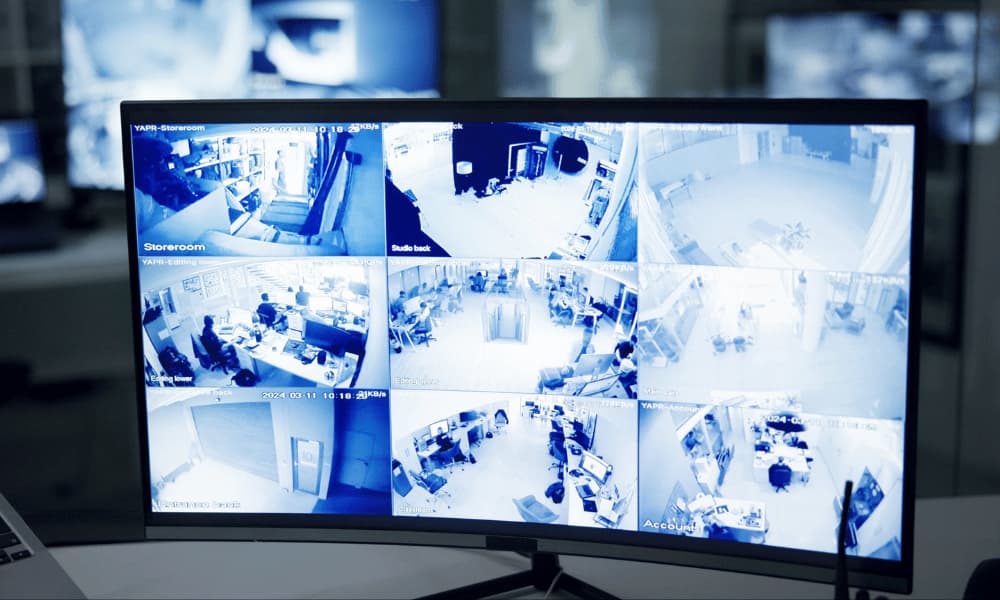
Move from simply recording surveillance footage to identifying what matters with AI-based video analytics, then explore how to deploy the technology effectively.
Key takeaways
- AI-based video analytics can identify defined objects, events, and behaviors in surveillance footage.
- Analytics can support real-time monitoring and make incident investigations faster.
- Useful alerts depend on proper cameras, configuration, system integration, and ongoing tuning.
- Powerful surveillance capabilities also require clear access, retention, and data-use policies.
- AI analytics supports security teams by directing attention to events that may require human review.
Security cameras have come a long way. For years, their main job was straightforward: record what happened so someone could review the footage later. That still matters, but when your organization has hundreds or even thousands of cameras, finding one important event among hours of footage can become a challenge.
AI-based video analytics changes how security teams work with that footage. Using AI and computer vision, the technology can identify predefined objects, events, and behaviors, then generate alerts or searchable metadata.
Instead of relying on someone to watch every camera continuously, your team can focus on activities that actually require attention.
AXIS Object Analytics from Axis Communications is one example of that change. On compatible Axis cameras, it can identify people and vehicles and trigger events based on configured scenarios, turning surveillance footage into useful information rather than simply a record of movement.
However, making surveillance information easier to identify, search, and share also raises important questions about how that information should be managed. That’s where thoughtful deployment becomes handy.
AI-based video analytics can give your security team useful information while keeping the technology aligned with your security objectives, infrastructure, and data policies.
Here’s what AI-based video analytics can detect, how security teams can use it, and what you should consider before deploying it.
What Can AI-Based Video Analytics Detect?
AI-based video analytics can identify specific objects and activities, helping security teams separate relevant events from general movement.
Common capabilities include:
- People and vehicles: Distinguish people and vehicles from general movement and, in some systems, classify vehicle types.
- Perimeter and intrusion: Detecting line crossing, restricted-area entry, and after-hours activity.
- Loitering: Identify people or vehicles remaining in an area beyond a defined period.
- Counting and occupancy: Track people or vehicles and monitor occupancy within defined areas.
- Specialized analytics: Support license plate recognition, facial recognition, PPE detection, tailgating, and crowd-density analysis.
Capabilities vary by camera, analytics engine, VMS, architecture, and configuration. So organizations should choose analytics based on the security problem they need to address.
From Detection to Action: How Security Teams Use Analytics
Detecting a person, vehicle, or event is useful, but the real value comes from what your security team can do with that information. AI-based video analytics can support faster responses, simplify investigations, and connect video with other parts of your security system.
1) Real-time monitoring
Watching every camera feed continuously isn’t realistic, especially across larger facilities. Instead, analytics can flag predefined events that may require attention.
For example, if someone enters a restricted area after hours, the system can detect the event and alert security personnel. An operator can then review the footage, determine what’s happening, and respond according to established procedures.
Analytics doesn’t replace the operator. It helps direct his or her attention to activity that may require human judgment.
2) Faster incident investigation
Recorded video also becomes easier to work with after an incident. Rather than manually reviewing hours of footage, investigators may be able to narrow searches using details such as:
- Person
- Vehicle
- Time
- Location
- Object type
- Specific event
That makes surveillance footage a more searchable investigative resource. International standard ONVIF Profile M, for example, supports analytics metadata and events that compatible systems can use to exchange information about detected objects and activity.
3) Integration
Analytics can also generate events and metadata that feed into other security and operational platforms. Depending on compatibility, integrations may include:
- Video management systems
- Access control
- Alarms
- Other operational or IoT systems
Connecting these systems can give your security team additional context when an event occurs. After all, detection is only useful when your organization can turn that information into an appropriate response.
The Value — and Responsibility— of Smarter Surveillance
AI analytics can help security teams focus on significant events instead of trying to monitor every camera continuously. It can improve situational awareness, simplify investigations, and make larger surveillance systems easier to manage.
For example, AXIS Object Analytics can count people or vehicles crossing a defined line and estimate occupancy in a selected area. That information can help security teams understand activity patterns and determine where closer attention may be needed.
However, making surveillance data easier to search and share also creates additional responsibilities. Organizations need clear policies covering who can access information, permitted searches, retention, sharing, and legitimate security uses.
Whether your organization uses analytics to monitor restricted areas, review incidents, or understand activity levels, the same principle applies: greater surveillance capabilities require thoughtful governance and responsible data practices.
Avoiding Alert Fatigue: More Information Isn’t Necessarily Better Security
AI analytics can identify a lot of activity, but that doesn’t mean your security team needs an alert for all of it. Poorly configured systems can generate false positives, irrelevant notifications, and excessive alerts that make important events harder to spot.
Several factors can affect analytics performance:
- Camera placement and field of view
- Image quality and lighting
- Weather and scene complexity
- Detection zones
- Threshold settings
That’s why it makes sense to start with clearly defined, high-value events and adjust the system based on actual performance. The goal isn’t more alerts, but more useful alerts.
What Organizations Should Consider Before Deploying AI Video Analytics
A successful deployment starts with the security problem you’re trying to solve. From there, you can determine whether your existing cameras, network, software, and infrastructure can support the analytics you need.
Consider these areas before deployment:
- Security objective: Define the events or activities that actually require attention.
- Camera infrastructure: Review placement, field of view, image quality, and coverage.
- System compatibility: Confirm compatibility across cameras, VMS, access control, and other security systems.
- Architecture: Determine whether analytics will run at the edge, on servers, in the cloud, or through a hybrid approach.
- Infrastructure: Account for network capacity, processing, and storage requirements.
- Governance: Establish permissions, retention periods, search policies, and applicable privacy requirements.
- Ongoing management: Plan for operator training, performance monitoring, configuration, and regular tuning.
At Unisol, successful AI video analytics deployment starts with system design and integration, not simply adding an AI-enabled camera. The cameras, analytics, VMS, network, and other security systems need to work together around your organization’s security objectives.
Smarter Video, Thoughtfully Deployed
Surveillance is moving beyond simply recording what happened. AI-based video analytics can help your security team identify important events, search footage faster, and focus attention where it’s actually needed.
However, effective deployment depends on appropriate technology, useful alerts, system integration, and responsible data practices. Your cameras, analytics, VMS, network, and operating procedures all need to work together around clear security objectives.
Unisol can help you evaluate your existing surveillance system and determine where AI-based analytics can support your security goals.
Ready to make your surveillance footage more actionable? Talk to Unisol about your video analytics and surveillance needs.
